Multizone | All our technotes
If we've published it, you can find it here.

Apple will update the MacBook Pro and other Macs with its latest M4 chip later this year, according to Bloomberg's Mark Gurman.
Which begs the question
Q: Which Apple MacBook should I buy?
A: At least a 16GB MacBook Air (13-inch, M3, 2024) if funds allow, or if you need to be frugal, a 16 GB MacBook Air (M1, 2020) or MacBook Pro (13-inch M1, 2020). There are lots of 8GB machines around but they won't do for development work or other heavy workloads and for protecting your residuals when the time to resell or trade in the 16GB will be far more desirable.
TL:DR – The 6GB/256GB MacBook Air (M1, 2020) at £599 is pick of the week on Amazon in February 2025! A 16GB/512 Macbook Pro (M1, 2020) at £750 is also quite enticing. Always read the fine print and compare prices widely before deciding, 256GB is not enough space for a main computer but as a laptop its probably fine.
- Details
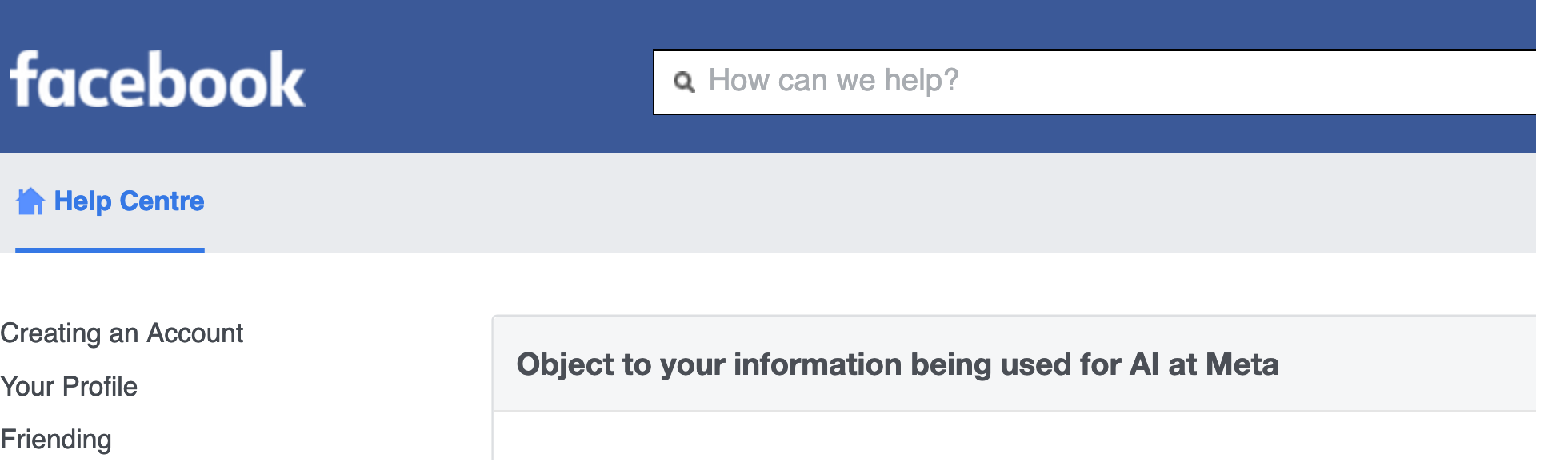
You have the right to object to Meta using posts, photos, captions and messages you’ve shared using their services to develop and improve Artificial Intelligence (AI). You have to submit a form including an impact statement to exercise that right. That seems quite an administrative burden but lets do it. I may not be Scarlett Johansson, but I think we can all agree that its for the best to keep my personality out of AI too.
Start here. Note that even if you do this it seems that Meta may ignore it if you are not covered by a relevant data protection law. And Meta may process information about you anywhere on their platforms where images of you are shared or mentioned in posts by someone else. Short of deleting all Meta products and looking for alternatives that do not behave in this way submitting an impact statement is the best you can do.
TL:DR – Meta are the owners of Facebook, Instagram, WhatsApp and Threads. Your information is everything except your private messages between friends and family. This could include postings on pages, photos, captions, and messages not between friends and family as well as the very specific graph information that these services collect about you to serve advertising and analytics. I'm going to suggest you don't want that! You can at least use the form to express in writing your request to prohibit the practice of your data being fed into these AI technologies as training data. It requires an impact statement which is a chore but I've created one. Whether it really achieves anything remains to be seen. Facebook responded pretty instantanously probably automatically, to my form.
- Details

Huge trade-in credit from Google for old iPhone for new Pixel 8a

Google really want your old iPhone for competitive upgrade reasons I suppose and were offering a marvellous £218 trade-in against a Pixel 8a provided your phone works, and is in good condition. My old iPhone 8 was purchased from Computer Exchange for £220 two years ago for use in software testing. Its fine for that but the battery doesn't hold much charge. Battery health isn't part of the trade-in criteria provided the phone turns on, isn't damaged and is reset to factory for a new user. Cost of ownership of £1 per year. Very satisfactory.
TL:DR – The Pixel. The only phone engineered by Google, is an unbranded (save for Google) Android experience, without manufacturer bloatware or unremovable system apps or launchers. The last three models have been reliable and fast. The only thing really setting the 6a to the bottom of the list is the lack of wireless charging. The 8a, because of the incredible trade-in offer for a new device and because it will be supported for at least seven years in the UK according to its UK PSTI Statement of Compliance, is the device of choice right now, if you have a device eligible for trade-in but the 7a is really almost as good and if you could find a bargain one it would be hard to ignore.
- Details
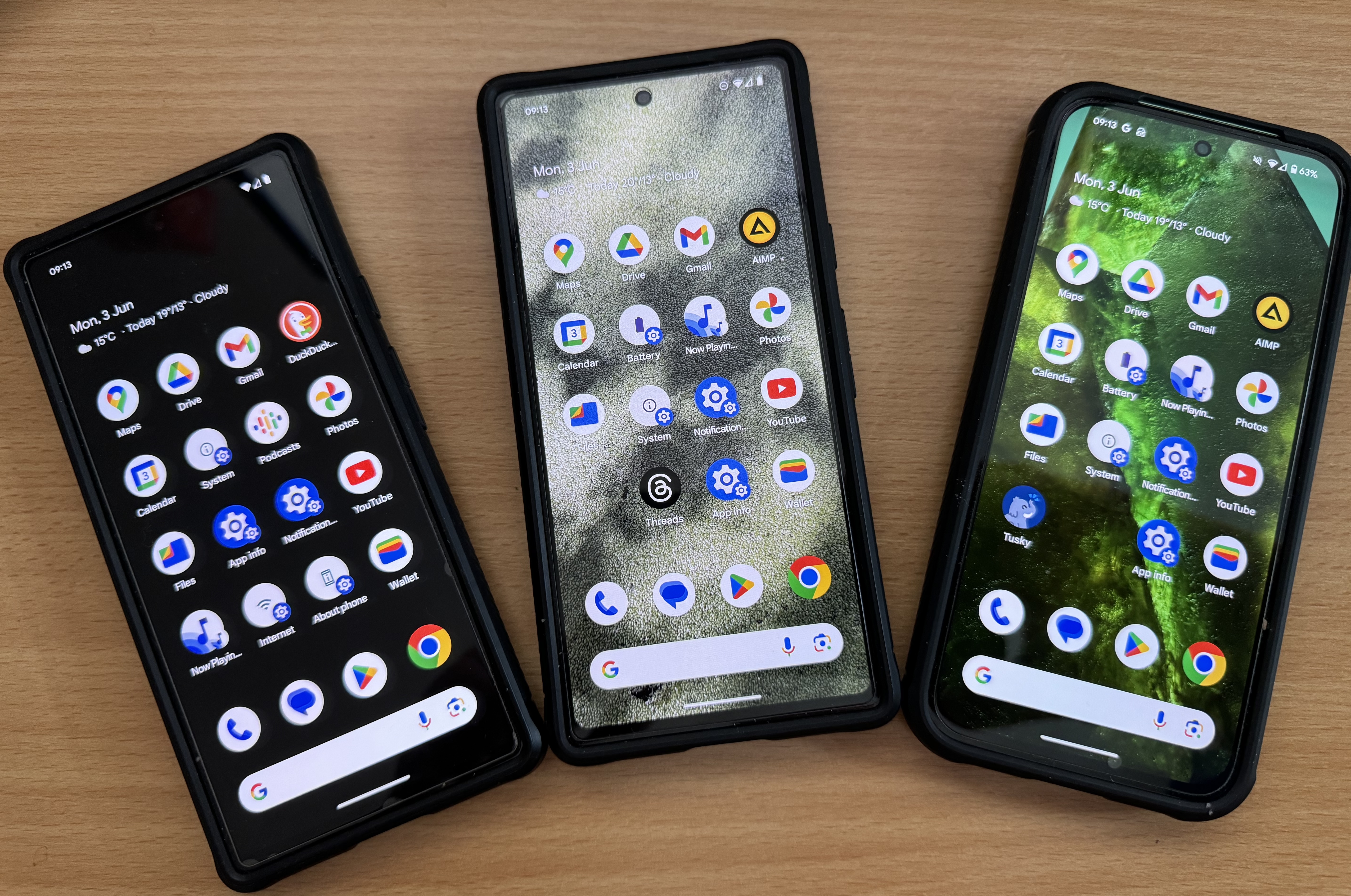
The Pixel 8a is out. If you have a 6a or a 7a already you don't need to upgrade!
Prices for Pixel phones are examined in my recent article Pixel 8a for £281, vs 7a and 6a, and seem to be all over the place for the older models. As low as £156 for a 6a on Amazon (Renewed - Refurbished - Good). Thats a lot of phone for the money.
TL:DR – The Pixel 8a is great, but it is not measurably better, so far, than the 7a. The 7a was a truly great budget phone and still is. The 7a is massively better than the 6a due to wireless charging and a miles better camera but the 6a is still a capable workhorse. All these phones are well built and have a quality feel to them. All have 5G and the Pixel vanilla Android OS is identical. If you need the latest then the 8a is lovely, but the 7a is really just as good. If you are on a budget or need a second or burner phone then the 6a is cheap now. If you have a 6a or a 7a already you don't need to upgrade.
- Details

Keys are simple to understand. We all have them, you can't open a door without one. Mostly they are made of metal and fit in a lock. People have been using keys for hundreds of years. Passwords and password security not so much. People are just bad at passwords. User access control policies are unwieldy and irritating and yet people get around them. I remember the induction to a well-known telecommunictions companies system where the trainer said:
"You have to change your password every three months, you can't re-use them again and they have to have a capital letter and a number, so just use something simple like the month and year and you'll always remember it, for example "May2024".
I like to think most of those employees passwords still use this easy to remember method, blissfully unaware that it renders the password itself almost completely useless.
So, what to do? You need passwords for now, they are still used in the vast majority of systems. But adding two-factor authentication with a security key as the second factor in addition to your password means there is a 0% possibility of a password attack or stolen or compromised password. That reassuring number has got to be worth a little admin and the small investment in a physical key!
And write a policy. It doesn't have to be back breakingly hard to understand and just needs to state what you can and cannot allow.
TL:DR – The benefits outweigh the costs by so much that it is hard to understand why businesses don't or won't use security keys in addition to passwords as a user access control. They massively improve user access control, and enable a business to be able to sail through the User access control section of Cyber Essentials certification here in the UK.
- Details
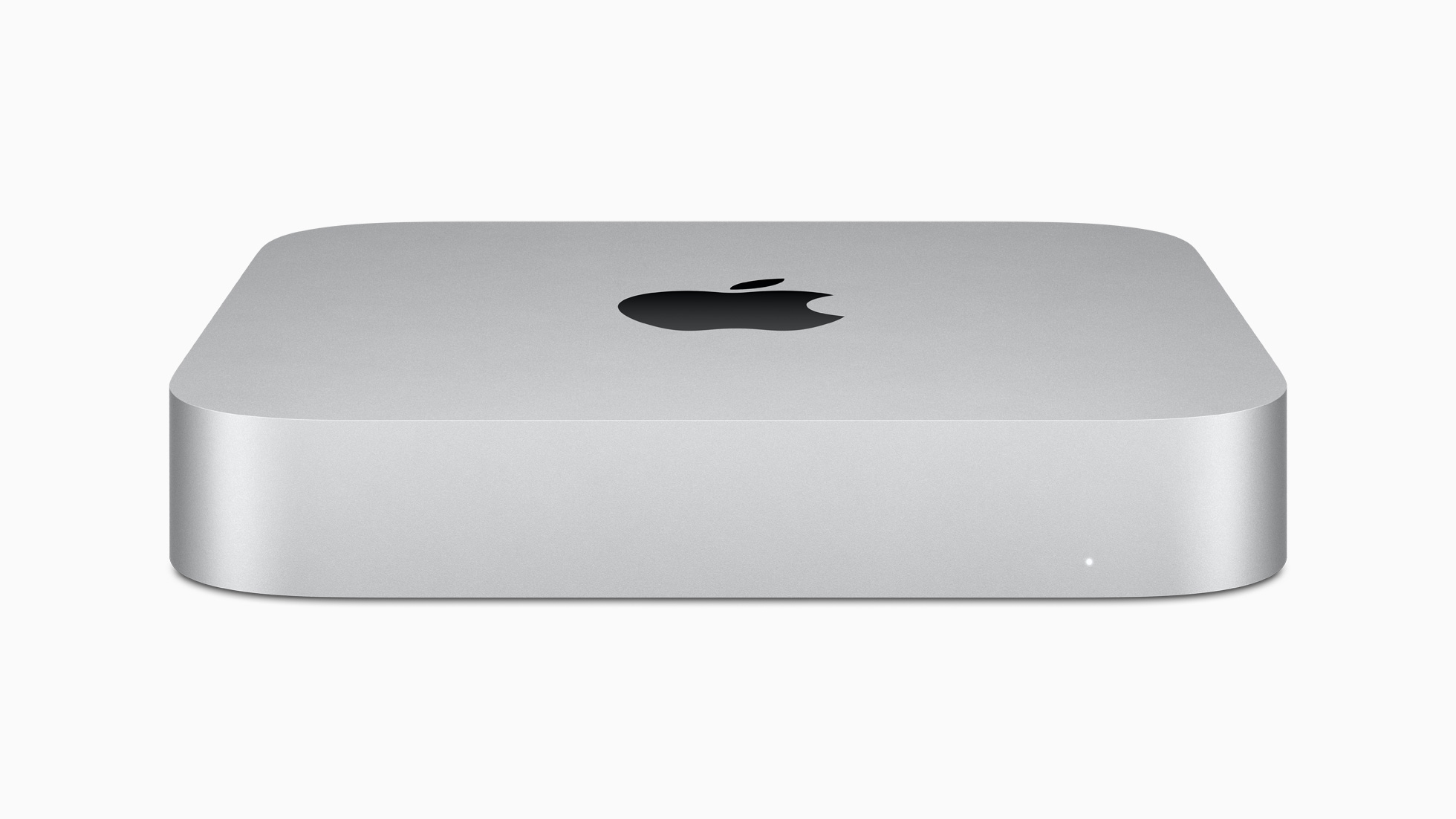
My Mac Mini was not being used much, latterly it just had a reassuring role as a disaster recovery machine for my Mac Studio, but was not actually needed anymore so I thought I'd trade it.
How did I do?
Pretty well I think. Kept almost 47% of value, and cost £11.21 per month.
If someone said you could have a decent dev spec Mac Mini (16GB, 512, M1) for under £12 a month you'd take it wouldn't you?
| Original Cost | £915.84 |
| CeX Voucher | £490 |
| Difference | £425.84 |
| Percentage of original value | 46.5% |
| Months owned | 38 |
| Monthly Cost (Before Trade in) | £24.10 |
| Monthly Cost (After Trade in) | £11.21 |
TL:DR — After just over three years my Mac Mini (M1, 2020) was still worth nearly 47% of its original cost as a trade-in to CeX. Pretty decent return for a computer thats been on 24/7 and is out of AppleCare coverage.
- Details

GNU ddrescue for hard disk imaging or recovery on Ubuntu 24.04 LTS
GNU ddrescue (ddrescue) is a proven data recovery tool which you can trust. However, it is also quite a complicated command line tool. If only there was a way to make it more straightforward to use.
- Details
Read more: Using GNU ddrescue for hard disk recovery on Ubuntu Linux