UK rail fares have continued to climb, making Railcards one of the smartest tools in any regular traveller's arsenal. In 2026, two cards stand out for those travelling in and around London and the South East: the Network Railcard and the Senior Railcard. Both now cost £35 a year and offer a third off fares, but they suit very different travel patterns. Getting this choice right can mean the difference between a card that pays for itself in a week and one that sits unused in your wallet.
TL;DR – The Network Railcard payed for itself quickly for me for years, but the Senior Railcard can paid for itself on a single long trip, which was outside the network card area so it looks a better choice now I am eligible.
Contents
 Senior Railcard
- 1/3 off train travel nationwide
 Network Railcard
- 1/3 off fares in London and the South East
- Why Railcards matter more than ever in 2026
- Understanding the Network Railcard
- Who can get it
- What you get
- Restrictions to know
- Understanding the Senior Railcard
- Who can get it
- What you get
- Restrictions to know
- Cost comparison at a glance
- Flexibility: which card fits your life?
- Travel times
- Geographic reach
- Group and family travel
- Real-world fare examples
- Age and the question of holding both cards
- Partner offers and non-travel perks
- How to apply
- Making the call
- Conclusion
Senior Railcard
1/3 off train travel nationwide
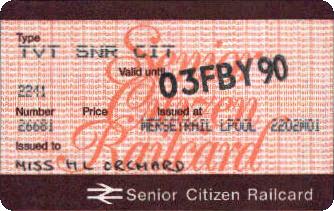
For anyone aged 60 or over, the Senior Railcard delivers a third off rail fares across the whole of Great Britain — peak and off-peak alike, though morning rush-hour journeys entirely within the South East are excluded. It covers standard and first-class fares, applies to Advance tickets, and up to four adults and four children travelling with you also benefit. At £35 a year (or £80 for three years), it can pay for itself on a single long-distance trip.
Network Railcard
1/3 off fares in London and the South East
Open to anyone aged 16 or over, the Network Railcard gives a third off off-peak fares within the Network Railcard zone — covering London, Brighton, Portsmouth, and the wider South East. Travel must start after 10am on weekdays; weekends and public holidays are unrestricted. A £13 minimum fare applies on some weekday journeys. Where it shines is group travel: up to four adults travelling together all get the discount, and up to two children travel for a fixed low fee per child. Also £35 a year.

Why Railcards matter more than ever in 2026
Rail fares have risen sharply over recent years, and the annual Railcard fee has moved with them — both the Network and Senior Railcards now sit at £35 a year, up from the £30 they held for a long time. That said, the maths still strongly favours buying one. A single off-peak return from a Home Counties station into central London can cover a meaningful chunk of the annual fee on its own. Travel a handful of times a month but not every single day in rush hours and you are almost certainly saving money.
The wider Railcard ecosystem has also expanded. There are now nine types of Railcard available across Great Britain, covering age groups from 16 right through to seniors, plus cards for veterans, disabled persons, and those travelling as a pair. Digital Railcards — loadable to your phone via the Railcard app, the Trainline app, or the National Rail app — have become the default for most people, removing the risk of leaving a physical card at home. A lost or stolen physical card can be replaced for £10 (waived if you have a police reference number), but if you go digital that concern largely disappears.
Understanding the Network Railcard
Who can get it
Anyone aged 16 or over living in or regularly travelling through the Network Railcard zone can buy one. There is no upper age limit and no requirement to be a commuter — leisure travellers benefit just as much. The zone covers a broad swathe of southern England, with London at its centre.
What you get
The headline benefit is a third off off-peak rail fares within the zone. The group discount is where the Network Railcard pulls ahead of most alternatives: up to four adults travelling together on the same booking all receive the discount from a single card. Up to two children can also travel for a fixed fee per child. For a family day out to Brighton or a group trip to the coast, the savings stack up quickly.
Restrictions to know
- Off-peak only on weekdays — travel must start at or after 10am Monday to Friday.
- Weekends and public holidays have no time restriction.
- A £13 minimum fare applies on some weekday journeys — short hops may not qualify for a discount.
- The card is only valid within the Network Railcard validity area. Journeys to Scotland, Wales, or much of northern England are not covered.
Understanding the Senior Railcard
Who can get it
The Senior Railcard is available to anyone aged 60 or over — no other conditions apply. It is one of the most straightforward Railcards to qualify for and one of the most generous in terms of geographic reach.
What you get
A third off most rail fares across the whole of Great Britain, including Advance, Off-Peak, and Anytime tickets in both standard and first class. Up to four adults travelling with the Railcard holder also receive the discount, and up to four children travelling in the same group get 60% off. The nationwide coverage is the defining advantage: whether you are heading to Edinburgh, Cardiff, or Cornwall, the discount applies.
Restrictions to know
- Not valid during the morning peak period for journeys entirely within the South East — typically before 10am on weekdays.
- A £12 minimum fare applies on weekday peak journeys on some routes.
- No minimum fare restriction applies at weekends or on public holidays.
- The physical card must be carried when travelling on a discounted ticket.
Cost comparison at a glance
| Category | Network Railcard | Senior Railcard |
|---|---|---|
| Annual cost | £35 | £35 |
| Three-year cost | £105 (no multi-year option) | £80 — better value for regular travellers |
| Discount level | 1/3 off off-peak fares from 10:00am in zone | 1/3 off most fares nationwide. (outside Network Railcard area of validity peak period) |
| Group benefit | You and up to 3 adults + 4 children (5-15) per card | None |
| First class discount | No | Yes (nationwide) |
| Peak travel discount | No | Yes (outside Network Railcard area of validity peak period) |
| Minimum fare | £13 on some weekday journeys |
The three-year Senior Railcard at £80 is worth flagging. If you are confident you will still be travelling regularly over the next three years, locking in at £80 versus three annual payments totalling £105 is a straightforward saving. The Network Railcard does not currently offer a multi-year option.
Flexibility: which card fits your life?
Travel times
If you have a flexible schedule — retired, part-time, or simply able to avoid the rush — the 10am weekday restriction on the Network Railcard is rarely a problem. But if you ever need to travel before 10am on a weekday within the South East, the Network Railcard gives you nothing. The Senior Railcard is more forgiving here: it works on peak trains too, with the exception of morning-peak journeys entirely within the South East.
Geographic reach
This is the clearest differentiator. The Network Railcard stops at the edge of its zone. The Senior Railcard works across England, Scotland, and Wales. If you travel to see family in Manchester, take holidays in Scotland, or visit friends in Wales, only the Senior Railcard helps you.
Group and family travel
The Network Railcard is the stronger card for group trips within the South East. Four adults all saving a third on a day out to Brighton or Canterbury on a single card is genuinely compelling. The Senior Railcard also extends to companions, but its group benefit is most useful for nationwide journeys rather than short regional hops.
Real-world fare examples
| Journey | No Railcard (Peak) | No Railcard (Off-Peak) | Network Railcard (after 10am) | Senior Railcard (Peak) | Senior Railcard (Off-Peak) |
|---|---|---|---|---|---|
| EFF Junction to London Zones 1–6 Travelcard | £33.60 | £26.00 | £22.60 | £33.60 | £22.60 |
| EFF Junction to Farringdon (rail only) | £23.40 | £19.20 | £13.00 | £23.40 | £12.65 |
| EFF Junction to Reading | £70.10 | £35.70 | £13.00–£23.55 | — | £34.65 |
| Kings Cross to Inverness (return) | £454.80 (2× Anytime Single) | £237.60 (2× Super Off-Peak Single) | N/A — outside zone | £300.10 (2× Anytime Single) | £147.50 (2× Super Off-Peak Single) |
The Inverness row tells the story clearly. A Senior Railcard saves around £90 on a peak return to Inverness — more than twice the annual card fee in a single trip. The Network Railcard cannot help at all on that journey. Conversely, for regular off-peak trips into London, the Network Railcard earns its keep within a handful of journeys and also works for any companions travelling with you.
Age and the question of holding both cards
If you are under 60, the Network Railcard is your only option of the two. Once you turn 60, the Senior Railcard becomes available and the calculus shifts. For anyone who travels both within the South East (regularly, off-peak) and occasionally makes long-distance trips, holding both cards simultaneously is a legitimate strategy. The combined annual cost of £70 can be recovered quickly if you travel with companions in the South East and also make even one or two long-haul rail journeys a year.
When transitioning, the cleanest approach is to let your Network Railcard run to expiry and then decide whether to renew it alongside a new Senior Railcard, or to switch entirely. If your long-distance travel is infrequent, the Senior Railcard alone may cover everything. If you regularly travel in groups around the South East, keeping both makes sense.
Partner offers and non-travel perks
Both cards come with a range of partner discounts covering days out, dining, and leisure activities. These vary over time and are worth checking on the respective Railcard websites when you buy, since they can add meaningful value beyond the rail discount itself — particularly if you are already planning to visit attractions or eat out on your trips.
How to apply
Both cards are available directly from their official websites or through the main Railcard site. You can choose a digital card — added to your phone via the Railcard app, Trainline, or National Rail — or a physical card posted to you. Digital is generally the more convenient option and removes the risk of travelling without your card. Both cards are valid for one year from purchase, with the Senior Railcard also available as a three-year card at £80.
Making the call
Ask yourself three questions. First: are you 60 or over? If yes, the Senior Railcard is available to you and its nationwide coverage makes it the more powerful card for most travel patterns. Second: do you regularly travel off-peak within the South East, sometimes with other adults? If yes, the Network Railcard earns its fee quickly and the group discount is a genuine differentiator. Third: do you occasionally travel long distances by rail? If yes, the Senior Railcard will save you significantly more on those journeys than the Network Railcard ever could — and a single trip to Scotland can cover the annual fee.
For most people over 60 who live in the South East, the honest answer is: consider both. The combined £70 annual outlay is modest against the savings available, especially if you travel with companions or make even one long trip a year.
Conclusion
The Network Railcard and the Senior Railcard are complementary rather than competing products. The Network Railcard is a workhorse for regular off-peak travel in and around London and the South East, with a standout group discount that no other card matches in the region. The Senior Railcard trades geographic restriction for nationwide reach and greater peak-time flexibility — and at £80 for three years, it rewards commitment. Your age, how often you travel, where you go, and whether you travel with others will point you clearly towards one, the other, or both. Review your choice each year as your travel habits change; the right card today may not be the right card in three years.